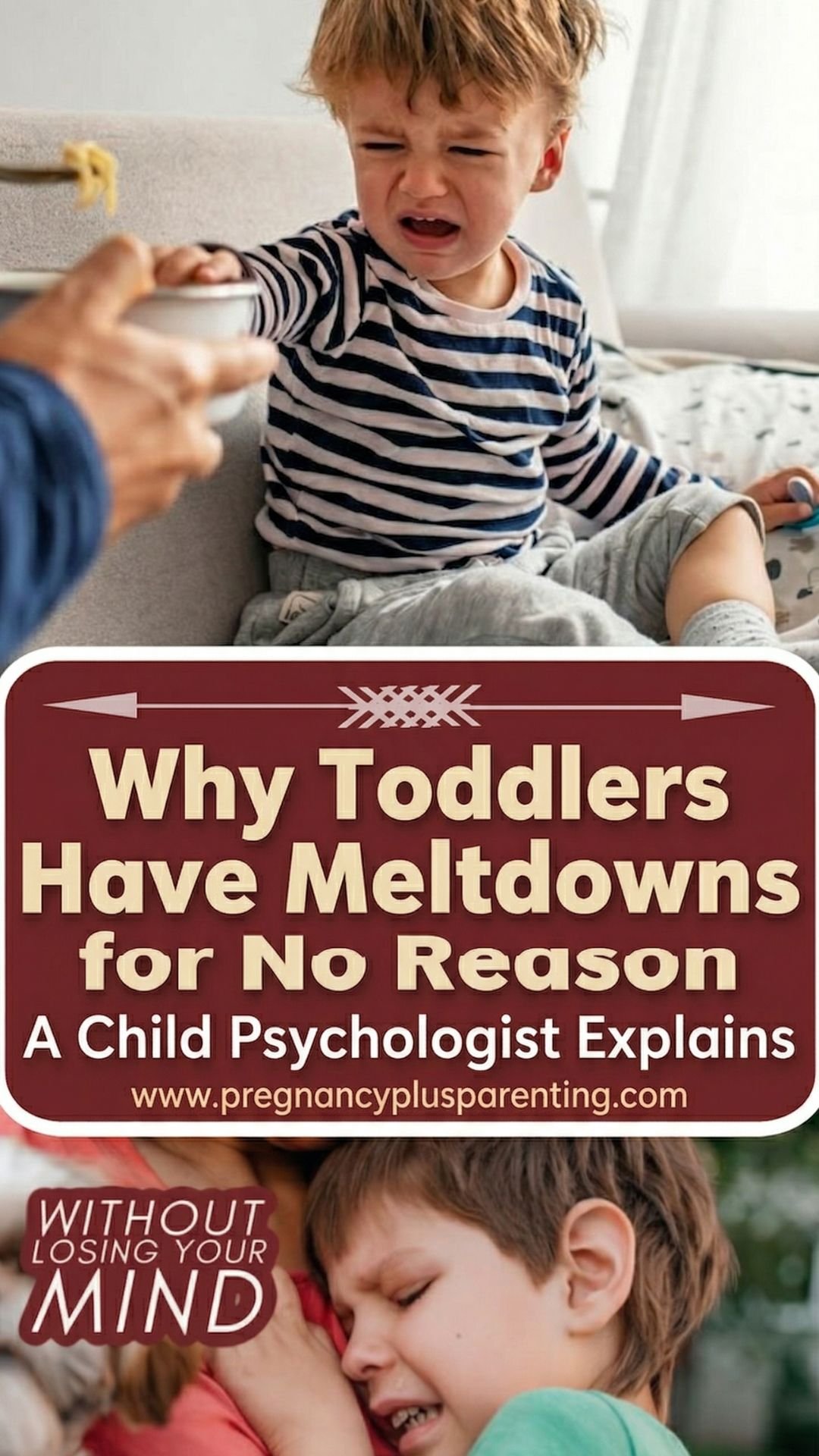
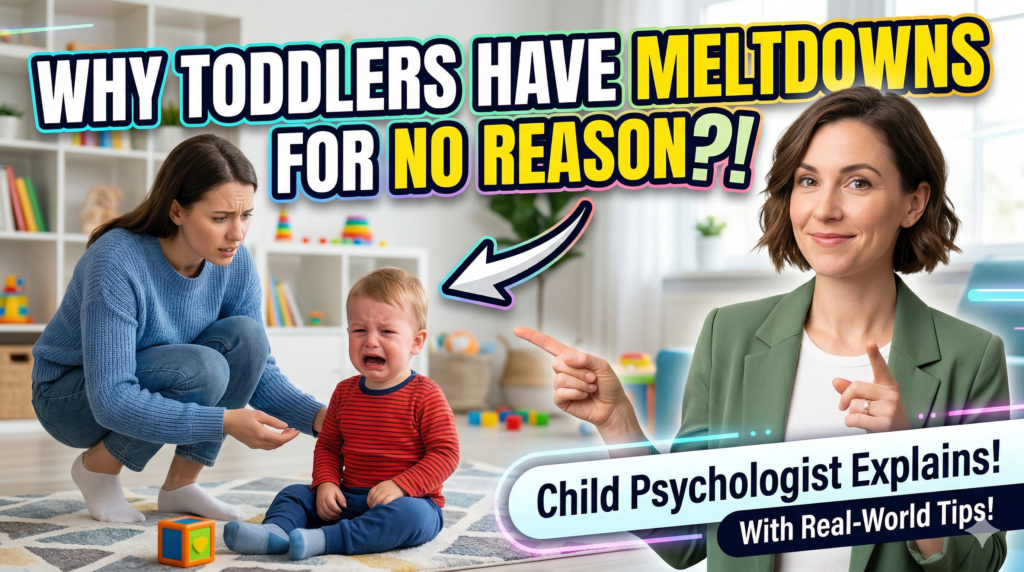

It was over a banana. Or maybe it was the wrong cup. Or you cut the sandwich into triangles when they wanted rectangles — you’re not even sure anymore. All you know is that one moment your toddler was fine, and the next they were a full-body storm of tears, screaming, and floor-melting despair.
The Toddler Brain: A Beautiful Work in Progress
To understand why your two-year-old seems to lose it over nothing, you need to understand a little about brain development. Specifically, you need to know about two parts of the brain that are in a very unequal relationship right now.
🧠 Two Brains, One Toddler
The amygdala — your child’s emotional alarm centre — is fully operational. It fires fast and loud when something feels wrong, overwhelming, or threatening. It does not pause to assess whether the threat is real. It simply reacts.
The prefrontal cortex — the part that regulates emotion, applies logic, and says “this isn’t a big deal” — is barely online. In fact, it won’t be fully developed until your child is in their mid-twenties.
At age two, your child has the full emotional intensity of a human being with almost none of the neurological brakes. That’s not a behavioural choice. That’s biology.
Neuroscientist Dr. Dan Siegel describes this as the difference between the “upstairs brain” and the “downstairs brain.” Toddlers live almost entirely in the downstairs brain — reactive, emotional, in the moment. The upstairs brain, where calm reasoning lives, is still under construction.
When a meltdown hits, your child hasn’t chosen to be dramatic. They are genuinely flooded. Their nervous system is overwhelmed, and they do not have the wiring yet to bring themselves back. That part is your job — for now.
See Also : Why Does My 2 Year Old Have Meltdowns for No Reason? (What’s Really Happening in Their Brain)
Triggers They Cannot Control (Even When They Look Ridiculous to You)
From the outside, a toddler meltdown over a broken cracker can look absurd. From the inside of a two-year-old’s nervous system, it’s a genuine crisis. Here are the most common triggers that your child has zero control over:
😴TirednessAn overtired toddler has even less access to their limited emotional regulation. The tank is empty; everything spills.
🍎HungerBlood sugar drops affect adult moods too — in a toddler without the words to say “I’m hungry,” this comes out as a storm.
🌊Sensory OverwhelmLoud places, scratchy tags, bright lights, new smells — a two-year-old’s nervous system is still learning what’s safe and what isn’t.
🚫Thwarted AutonomyAt this age, toddlers are wired to try to do things independently. Being stopped or redirected can feel like a genuine loss of self.
🔄TransitionsMoving from one activity to another — even fun to fun — requires a cognitive shift toddlers find genuinely difficult.
💬Communication LimitsThe average two-year-old has 50 words. Their emotional experience has thousands of dimensions. The gap is enormous and frustrating.
Notice what’s not on that list: manipulation, attention-seeking, or deliberately testing you. Those explanations require a level of strategic thinking a two-year-old’s brain simply cannot sustain. Meltdowns are not performances. They are distress signals.
What a Meltdown Feels Like From the Inside
We talk a lot about what meltdowns look like from the parent’s side. But imagine, for a moment, what it feels like from inside your child’s experience.
🫧 Inside Your Toddler’s Mind
“Something is wrong and I don’t have a word for it. My body feels too big and too hot and I don’t know why. I wanted the blue cup and now everything feels like it’s falling apart — not just the cup, everything. I can feel that you’re frustrated with me and that makes it worse, so much worse. I’m not doing this on purpose. I don’t even know what ‘on purpose’ means yet. I just need someone to tell me that I’m still safe, that you’re still here, that the world isn’t ending — even though it really, really feels like it is.”
Researchers who study toddler emotional development describe meltdowns as “emotional flooding” — the brain is so overwhelmed with feeling that there is no room left for language, logic, or listening. This is why talking to a child in the middle of a full meltdown rarely works. You are trying to reach the upstairs brain when it has temporarily gone offline.
Your child isn’t giving you a hard time. They’re having a hard time. Those are two entirely different things — and the response that actually helps looks very different depending on which one is true.
The meltdown is also, in a very real way, a sign of trust. Children tend to fall apart most completely around the people they feel safest with. Your toddler is not saving their worst behaviour for you as punishment. They are saving it for you because you are their safe place to fall.
See Also : 15 Phrases To Use When Your Toddler Doesn’t Listen.
5 Gentle Responses That Actually Help
Now for the part you came for. Here are five evidence-backed, gentle responses that genuinely move the needle — not just for getting through this meltdown, but for building long-term emotional regulation skills in your child.
1. Stay Calm First — Regulate Yourself
This sounds obvious, but it’s the hardest one. When your child is dysregulated, your nervous system will naturally begin to mirror theirs. Your voice gets tighter, your jaw clenches, your patience evaporates. Before you can help them regulate, you need to regulate yourself.
Take one slow breath. Soften your shoulders. Lower your voice instead of raising it. Children co-regulate with us — meaning they calm down by borrowing our calm. If you’re flooded, they stay flooded.
Try saying to yourself:”This is hard for both of us. I can be the steady one right now.”
2. Get Low and Name What You See
Drop to their level physically — kneel, crouch, sit on the floor. It changes the entire dynamic. Then name the emotion you’re observing. You don’t need to fix it or explain it away. Just name it.
This is called “emotion coaching,” and research by psychologist John Gottman shows it’s one of the most powerful things a parent can do for a child’s long-term emotional intelligence. When we name feelings for children, we help them build the neural pathways to eventually manage those feelings themselves.
Try saying:”You’re really upset. You wanted that and now it’s gone. That feels so big right now.”
3. Offer Your Presence Without Pressure
Some toddlers want to be held during a meltdown. Others need space. Pay attention to what your child is telling you with their body. If they push you away, don’t take it personally — stay nearby, keep your voice calm and low, and let them know you’re there.
Avoid the urge to problem-solve, negotiate, or reason through the meltdown. That’s talking to an upstairs brain that has temporarily gone offline. What works instead is simply being a warm, steady, non-reactive presence.
Try saying:”I’m right here. I’m not going anywhere. You’re safe.”
4. Validate Before You Redirect
One of the biggest mistakes parents make — understandably — is jumping straight to distraction or correction. “Stop crying, let’s go do something fun.” The problem is that when we skip validation, children feel unseen, which often intensifies the meltdown.
Validation does not mean agreement. You don’t have to think the banana situation was a crisis to acknowledge that your child experienced it as one. Acknowledge first, redirect second.
Try saying:”I hear you. You really wanted that. It’s okay to feel sad about it. When you’re ready, we can figure out what to do next together.”
5. Reconnect After — Not During
Once the storm has passed and your child is calm — really calm, not just quiet — that’s the time for a brief, warm reconnection. A hug, a few soft words, maybe a little joke. This is not the time for a lecture about behaviour.
The repair after a big emotion is where the real learning happens. It tells your child: big feelings are survivable. You and I are okay. We get through hard things together. Over time, this builds genuine emotional resilience — the kind that lasts into adulthood.
Try saying:”That was a lot of big feelings. I love you so much. Want a hug? We’re all good.”
See Also : Breastfeeding Two? Here’s How to Manage a Newborn and Toddler at Once
One More Thing Worth Remembering
The meltdowns won’t last forever. This stage of intense emotional flooding is a feature of toddlerhood — not a flaw in your child, and not a failure of your parenting. Every calm, connected response you give is literally wiring their brain differently. You are building their emotional nervous system, one hard moment at a time.
It doesn’t require perfection. You don’t have to get it right every time. Research on parent-child attachment consistently shows that it’s the pattern of repair — coming back together after a rupture — that matters most. You can lose your patience, take a breath, and try again. That’s not failure. That’s modelling.
Your two-year-old is not broken. Their brain is just young. And you, showing up with curiosity instead of frustration, are already doing more than you know.
You’re Not Alone in This
Every parent of a toddler is living some version of this story. The meltdowns, the confusion, the love that makes it all feel so high-stakes.
You’re not failing. You’re in it. And that makes all the difference.