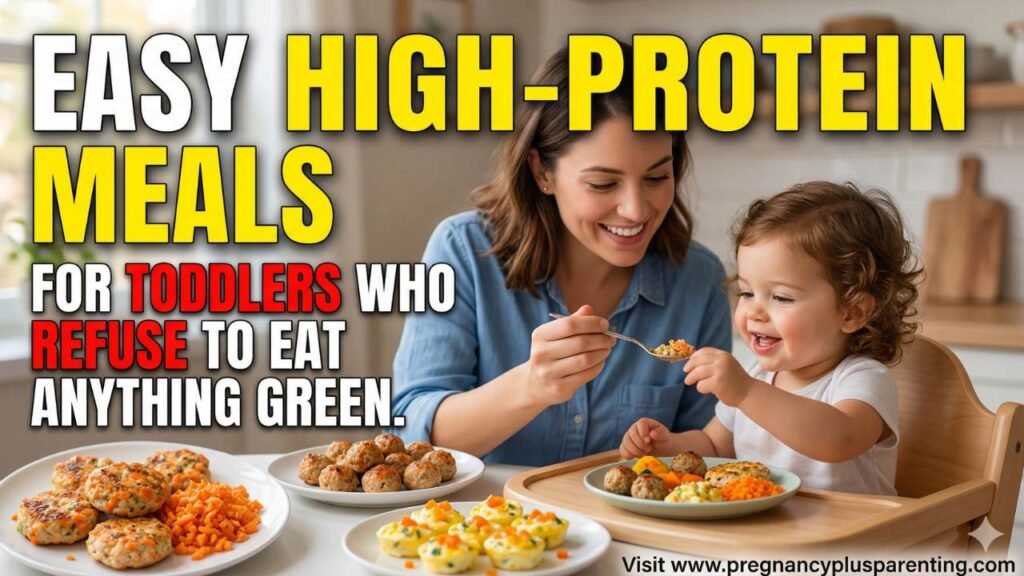

If your toddler takes one look at anything remotely green and treats it like you have placed a live insect on their plate, welcome. You are in very good company.
Green food refusal is one of the most common feeding challenges parents of toddlers face, and it makes complete sense from a developmental standpoint. Many green vegetables are bitter, and children have significantly more taste buds than adults — meaning that bitterness registers more intensely for them. Add in the fact that green foods often have complex textures, unfamiliar smells, and an appearance that stands out from the beige and white foods most toddlers gravitate toward, and you have a perfect storm of refusal.
But here is the thing: your toddler does not have to eat green foods to get excellent nutrition right now. Protein especially has nothing to do with color. And when your toddler is getting enough protein, their energy, growth, mood, and even sleep tend to improve noticeably.
In this article I am sharing the easiest, most toddler-friendly high-protein meals and snacks that have absolutely nothing green in them — alongside a few gentle strategies for slowly expanding what your toddler will eat without turning every meal into a battle.
Why Protein Matters So Much for Toddlers
Toddlers between the ages of 1 and 3 need about 13 grams of protein per day, and children between 4 and 8 need around 19 grams. These numbers are not enormous, but they matter a lot for this stage of development.
Protein supports muscle growth and repair, brain development, immune function, and the production of hormones and enzymes that keep your child’s body running. It also plays a significant role in blood sugar stability — which means a toddler who gets enough protein at meals tends to have better energy, fewer meltdowns, and more sustained focus than a toddler running mostly on crackers and fruit.
The good news is that many foods toddlers already love are excellent protein sources. You may be closer to meeting your toddler’s protein needs than you think.
High-Protein Foods Toddlers Actually Eat
Before we get into full meal ideas, here is a quick reference list of high-protein foods that most toddlers will accept — none of which are green.
Eggs are one of the best toddler protein sources available. One large egg contains about 6 grams of protein and can be prepared in dozens of ways. Scrambled, hard-boiled, as an omelette, in fried rice, or baked into muffins — eggs are endlessly versatile and beloved by most toddlers.
Full-fat Greek yogurt is another powerhouse. A half cup of plain full-fat Greek yogurt contains 8 to 10 grams of protein. Most toddlers who like yogurt will happily eat it with a little honey (for children over 12 months), fruit, or mixed into a smoothie.
Cheese is a no-argument protein source for most toddlers. Cheddar, mozzarella, string cheese, cottage cheese — all excellent. Cottage cheese in particular is underrated as a toddler food, with about 14 grams of protein per half cup.
Chicken, especially when it is soft, shredded, or in a familiar form like a nugget, is accepted by most toddlers. Ground turkey and ground beef are similarly accessible.
Canned tuna and salmon, when mixed with a little mayo or cream cheese and served as a spread or in a quesadilla, are surprisingly well-received by many toddlers.
Beans and lentils, while not always instinctively thought of as protein foods, are genuinely excellent sources. Half a cup of cooked lentils has about 9 grams of protein. When prepared in the right way — blended into soup, mashed into patties, or stirred into a familiar sauce — they disappear easily into meals.
Nut butters, particularly peanut butter and almond butter, offer about 4 grams of protein per tablespoon and are a reliable toddler staple.
Whole milk and fortified plant milks contribute meaningful protein as well, particularly for toddlers who are good milk drinkers.
Easy High-Protein Meal Ideas
Mini Egg Muffins
These are one of the most useful things you can make for a toddler. Whisk together 6 eggs, a splash of milk, shredded cheese, and any mix-ins your toddler will tolerate — diced ham, cooked ground turkey, or just extra cheese. Pour into a greased mini muffin tin and bake at 350 degrees for 15 to 18 minutes. Each muffin contains a meaningful amount of protein, they freeze beautifully, and toddlers love eating something palm-sized that they can hold themselves.
Cheesy Scrambled Eggs with Toast
Simple, fast, and genuinely protein-rich. Two eggs scrambled with a generous amount of shredded cheddar and served with a slice of whole grain toast delivers about 14 grams of protein. Add a side of fruit and you have a complete, balanced meal in under 10 minutes.
Greek Yogurt Parfait
Layer full-fat plain Greek yogurt with fruit and a drizzle of honey. If your toddler will accept granola, add a small sprinkle for texture and extra staying power. This works equally well as a breakfast, snack, or light lunch. The protein content from the yogurt alone is significant, and most toddlers love assembling their own layers.
Chicken and Cheese Quesadilla
A toddler classic for good reason. Soft shredded chicken and melted cheese inside a lightly crisped flour tortilla is accepted by the vast majority of picky eaters because every element is familiar and non-threatening. Cut into small triangles or strips. You can add refried beans to the inside without most toddlers noticing, which bumps the protein and fiber content significantly.
Peanut Butter Banana Wrap
Spread peanut butter generously on a small flour tortilla, add banana slices, and roll it up. Cut into pinwheels for easier eating. This is an excellent high-protein snack or light lunch that requires almost no preparation and almost never gets refused. Peanut butter also contains healthy fats that support brain development.
Tuna Melt Triangles
Mix canned tuna with a little cream cheese or mayo, spread onto bread, top with shredded cheese, and broil for a few minutes until melted and slightly golden. Cut into small triangles. The cream cheese or mayo softens the tuna and makes the flavor milder, which is often the key to toddler acceptance. This meal delivers a strong protein hit in a format that feels familiar.
Lentil Soup (Blended Smooth)
I know — lentils sound like a hard sell. But a well-made blended lentil soup with mild spices is one of the most accepted hidden-protein meals for toddlers. Cook red lentils with chicken broth, a little butter, cumin, and salt until completely soft, then blend until silky smooth. The texture ends up similar to a thin purée, there is nothing green in sight, and the flavor is mild and slightly savory. Serve with bread for dipping. Red lentils especially become a warm golden-orange color when cooked, which toddlers tend to find more approachable than anything green or unfamiliar.
Mini Turkey Meatballs
Mix ground turkey with breadcrumbs, an egg, parmesan, and a little garlic powder. Roll into very small balls and bake at 400 degrees for about 15 minutes. These freeze well and can be served with pasta and marinara, on their own with a dipping sauce, or sliced into pieces for younger toddlers. Ground turkey is mild in flavor, soft in texture when made this way, and very high in protein.
Cottage Cheese with Fruit
Full-fat cottage cheese with a side of fruit — diced mango, peaches, or pineapple — is one of the highest-protein snacks you can offer a toddler with almost zero preparation. The mild flavor and creamy texture make it easier for most toddlers to accept than you might expect. If your toddler is resistant to the curds, blend it smooth and it becomes almost indistinguishable from yogurt.
Fried Rice with Egg
Leftover rice, a scrambled egg stirred in, a little butter and soy sauce, and any protein add-ins your toddler accepts — diced chicken, shrimp, or just extra egg. This comes together in under 10 minutes, uses whatever you have on hand, and the familiar rice base makes toddlers far more willing to accept whatever is mixed into it. The egg alone gives you a solid protein foundation, and the dish is endlessly adaptable.
Cheese and Bean Burritos
Mash canned pinto or black beans with a fork, season simply with a little salt and cumin, and spread inside a flour tortilla with shredded cheese. Warm in a pan until the tortilla is slightly golden and the cheese is melted. The mashed texture of the beans blends into the burrito seamlessly. Most toddlers who eat quesadillas will accept this variation. The protein and fiber combination makes it one of the most satisfying lunches you can put together in five minutes.
Peanut Butter Oat Energy Balls
Mix rolled oats, peanut butter, honey, and a handful of mini chocolate chips together, roll into small balls, and refrigerate for an hour. These require no baking, keep in the fridge for a week, and are eagerly consumed by most toddlers as a snack. Each ball contains meaningful protein from the peanut butter and oats, plus enough sweetness to be genuinely exciting.
A Note on Hiding Vegetables Versus Exposing Them
You will notice that none of the meals above involve sneaking vegetables in. This is intentional.
Hiding vegetables in your toddler’s food is a popular strategy, and it is not harmful — but it does not help your toddler learn to actually like vegetables over time. When they eventually discover the spinach in the smoothie, it can feel like a betrayal and make them more suspicious about food in general.
What works better in the long run is serving vegetables alongside meals without pressure or comment, allowing your toddler to explore them on their own timeline. The goal is not to trick them into eating vegetables today. The goal is to raise a child who has a healthy, curious, low-anxiety relationship with food long-term.
Vegetables can appear on the plate — even if untouched for weeks — as a normal, neutral part of mealtime. Over time, familiarity replaces fear. And your toddler’s vegetable acceptance will grow on their own schedule, especially when mealtimes feel safe instead of pressured.
What If Your Toddler Is Still Not Getting Enough Protein?
If you are genuinely concerned about your toddler’s protein intake, a pediatric dietitian is the most useful person to consult — not because something is necessarily wrong, but because they can give you an accurate picture of where your toddler actually stands nutritionally based on what they are eating.
In the meantime, a few strategies that help: serve protein-containing foods at every meal and snack rather than just at dinner, offer protein earlier in the day when toddlers tend to have more appetite, and do not overlook small amounts — even a tablespoon of peanut butter or a string cheese adds up.
Most toddlers who eat even a small variety of the foods on this list are meeting their protein needs more easily than their parents realize.
Final Thoughts
Feeding a picky toddler who refuses vegetables is exhausting, and the constant worry about whether they are getting enough nutrition on top of that makes it even harder. But I hope this article gives you a little breathing room.
Your toddler does not need to eat green things to be well-nourished right now. They need consistent access to foods they will actually eat, a low-pressure mealtime environment, and a patient, unhurried approach to expanding what they are willing to try. Protein-rich meals that your toddler enjoys are not a consolation prize — they are genuinely good nutrition, and they are a foundation you can build from.
Start with what they already love. Build from there. The green foods can wait.