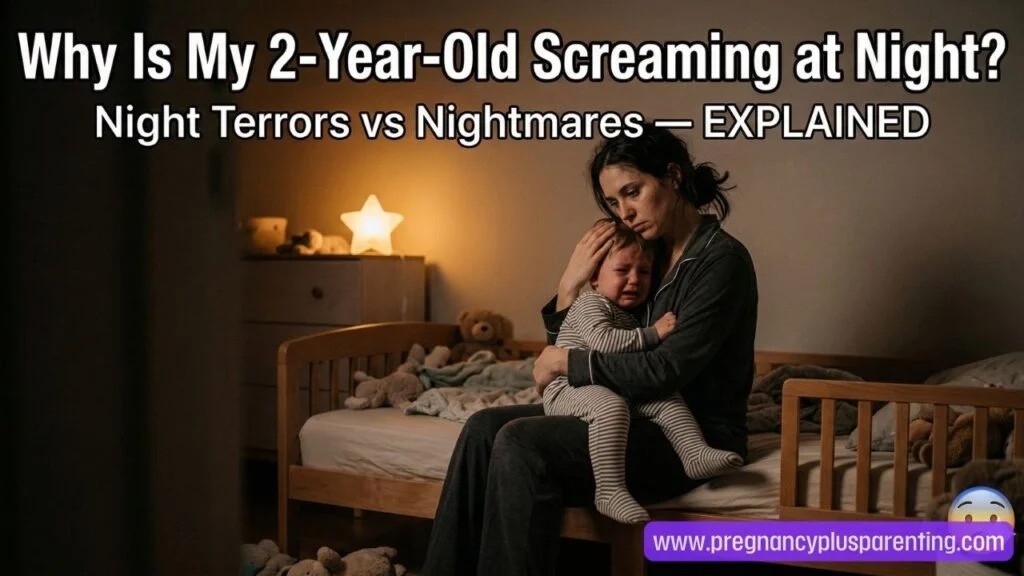

If you’re reading this at midnight or 3 a.m. after your own version of that night, first of all — I see you. You’re not alone, and your child is not broken. What’s happening is more common than you think, and most of the time, it’s completely explainable once you know what to look for.
In this article, I’m going to walk you through every major reason a two-year-old wakes up screaming at night — what each one looks like, why it happens, and what you can actually do about it in a gentle, connection-based way. No cry-it-out required.
1. Night Terrors — The One That Scared Me Most
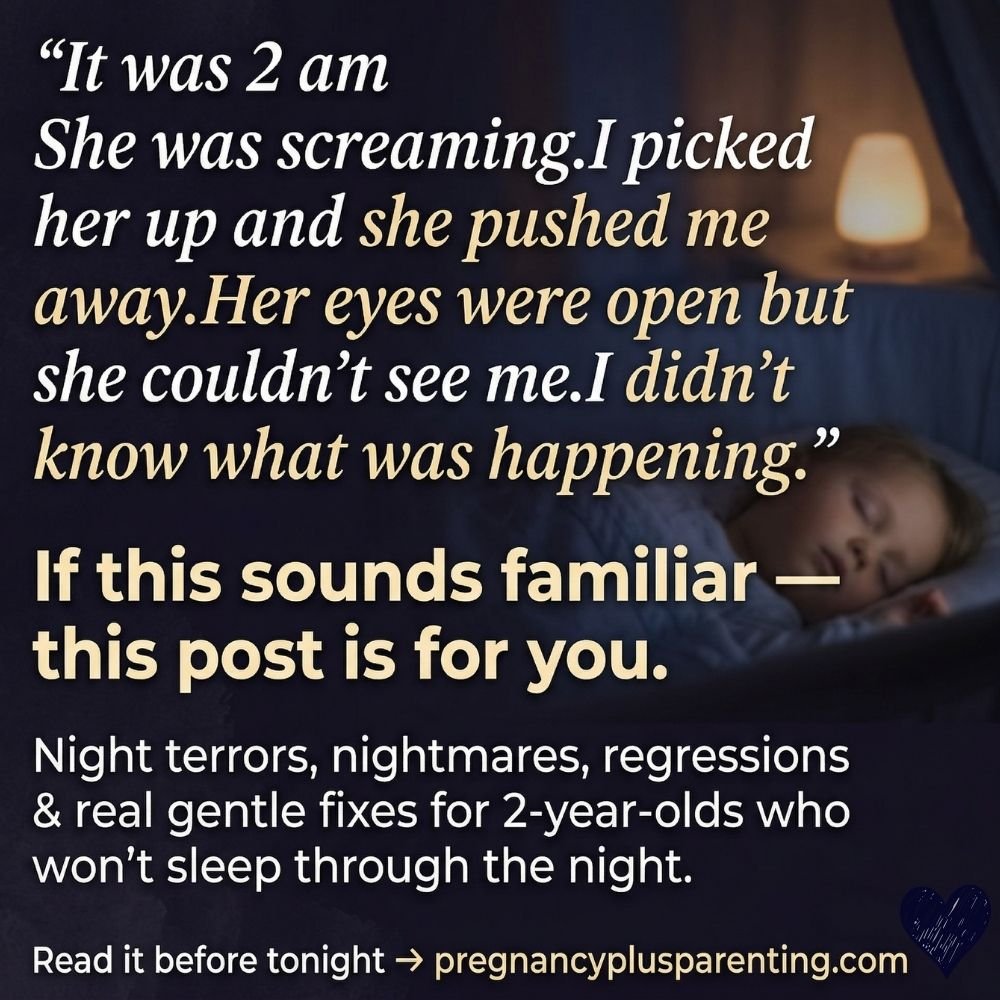
When I described what happened that night to our pediatrician, she nodded and said, “That’s a textbook night terror.” And I felt two things simultaneously: relief that there was a name for it, and confusion because how on earth was I supposed to know that?
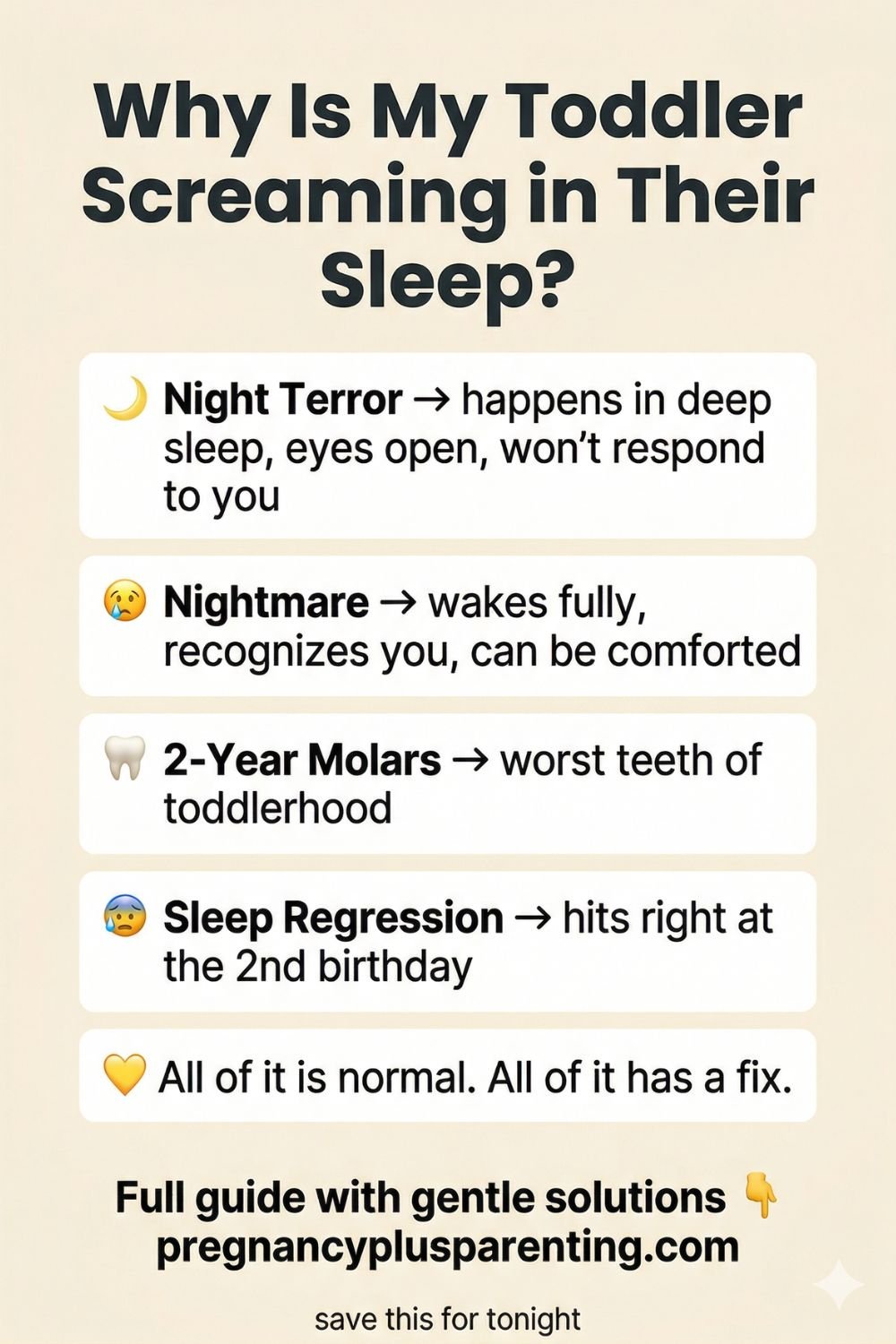
Night terrors are one of the most common reasons toddlers wake up screaming — and also one of the most misunderstood. Here’s the thing that tripped me up: they are not nightmares. Your child is not actually awake. They are not aware of what’s happening, they can’t hear your reassurances, and they almost certainly won’t remember any of it in the morning.
What a Night Terror Looks Like
Night terrors typically happen in the first third of the night — usually between one to three hours after your toddler falls asleep. This is because they occur during the transition from deep non-REM sleep into lighter REM sleep, a shift that is still neurologically immature in young children.
During a night terror, your two-year-old may:
- Scream or cry intensely without obvious cause
- Appear awake but be completely unresponsive to your voice or touch
- Look confused, glassy-eyed, or panicked
- Thrash around, kick, or push you away
- Have a rapid heart rate or be sweating
- Be inconsolable no matter what you do
- Return to calm sleep within a few minutes with no memory of the episode
That last part is what really threw me. She woke up the next morning completely cheerful, asking for banana with her oatmeal. I was the one still emotionally recovering.
Why Night Terrors Happen at Age 2
Night terrors are most common between the ages of one and five, with two being a particularly common peak. They are rooted in the immaturity of the central nervous system — specifically, the part of the brain responsible for transitioning between sleep stages is still developing. When something disrupts this transition, the child gets partially stuck between deep sleep and wakefulness. They experience the fear response of being awake without the conscious awareness to process it.
Common triggers include:
- Overtiredness or irregular sleep schedules
- Fevers or illness
- Stress or big changes at home
- A disrupted sleep environment (noise, light, travel)
- Skipping a nap
What to Do During a Night Terror
This is where gentle parenting instincts can actually work against you, because every impulse you have is to swoop in and soothe — and yet that often makes night terrors worse. Here’s what pediatric sleep experts and child development specialists generally recommend:
- Stay calm and stay close — Your child is not in danger and cannot be comforted by you right now, but you need to be there to ensure their physical safety.
- Do not try to wake them up — Waking a child during a night terror can increase disorientation and extend the episode.
- Do not hold them if they’re pushing you away — Respect their flailing. Position yourself nearby but don’t restrain.
- Keep the environment calm — Turn on a very soft light if needed, speak in low gentle tones even if they can’t hear you. It helps regulate your nervous system, which helps them when they do come back to awareness.
- Wait it out — Most night terrors resolve on their own within five to fifteen minutes.
I know how hard it is to do nothing when your baby is screaming. But this is genuinely one of those moments where the most loving thing is to wait, watch, and be present without intervening.
See Also : Exactly What to Say to Your Toddler During a Meltdown (Scripts That Actually Calm Them Down)
2. Nightmares — Yes, Toddlers Have Them
Nightmares are different from night terrors in several important ways, and once you understand the difference, responding to them becomes much more intuitive.
While night terrors happen in deep non-REM sleep, nightmares happen during REM sleep — the dreaming stage. This means your child is actually dreaming something frightening. It also means they are awake when they cry out, and they will remember it (at least in fragments).
Signs It’s a Nightmare and Not a Night Terror
- Your child wakes up fully and looks at you — they recognize you
- They can be comforted by your presence and voice
- They may try to tell you something (“big dog,” “fall down,” “scary”)
- Nightmares typically happen in the second half of the night when REM sleep is more concentrated
- Your child may be reluctant to go back to sleep or cling to you
At age two, children’s imaginations are rapidly expanding. They’re processing everything — the dog that barked too loud at the park, the cartoon with the loud villain, the time someone took their toy at playgroup. All of this emotional material gets processed at night through dreaming, and sometimes that processing produces fear.
How to Help After a Nightmare
- Go to them immediately — your presence is the single most regulating force in their nervous system
- Hold them if they want to be held
- Validate the fear: “That sounds so scary. You’re safe now. Mama/Baba is right here.”
- Don’t dismiss it (“It wasn’t real, don’t cry”) — their fear is real even if the dream wasn’t
- Check the room together if they’re scared of something being there
- Stay until they feel settled — there’s no time limit on comfort
3. Separation Anxiety at 2 — It Peaks Again
Many parents assume separation anxiety is a baby thing — something you get through at six months and then it’s done. But actually, it resurges at around eighteen months to two years with renewed intensity, and this time your toddler has more language, more awareness, and more emotional capacity for both connection and fear of losing it.
My daughter went through a phase at two where she needed to know where I was at all times. During the day this was manageable. At night, it became part of why she was waking up. She’d wake up, find herself alone, and scream — not in terror, not from a nightmare, but from a completely rational (from her perspective) panic of “Where did my person go?”
Signs It’s Separation Anxiety Driving the Waking
- Your child calls for you specifically — “Mama! Mama!” rather than just crying indiscriminately
- They calm quickly once you appear
- It may coincide with a life transition (new sibling, daycare change, travel)
- They may also show more clinginess during the day
Gentle Approaches for Separation Anxiety at Bedtime
- A consistent, connected bedtime routine — The predictability of routine helps the nervous system down-regulate before sleep
- A comfort object — A soft toy or item of your clothing can serve as a “proxy presence” during the night
- Goodbye rituals — Something like “I’ll check on you in ten minutes” gives concrete reassurance; just make sure you actually do it
- Daytime connection deposits — The more connected your child feels to you during the day, the more security they carry into sleep
- A photo of you by the bed — For some toddlers, being able to see your face helps bridge the separation
4. The 2-Year Sleep Regression Nobody Warns You About
You survived the four-month regression. You survived the eight-month regression. You thought you were done. And then, right around the second birthday, sleep falls apart again.
The two-year sleep regression is real, and it tends to catch parents completely off guard because things had been going well. It usually coincides with several developmental milestones happening at once:
- A language explosion — the brain is working overtime processing new words and concepts
- Increased autonomy and beginning of the “no” phase
- Dropping the nap or transitioning nap schedules
- A surge in imaginative thinking (which also feeds nighttime fears)
- Molars coming in (more on that in a moment)
During a sleep regression, a toddler who was previously sleeping through the night may start waking up once, twice, sometimes three times. They may resist bedtime for the first time. They may start waking up too early.
How Long Does the 2-Year Sleep Regression Last?
Most families see it resolve within two to six weeks, provided you’re not accidentally reinforcing new sleep habits that will be hard to undo. This doesn’t mean you shouldn’t respond to your child at night — connection and responsiveness are not the problem. But if your child has learned to sleep with a specific prop (nursing, rocking, your presence), this regression may activate that dependency in overdrive.
Surviving the 2-Year Sleep Regression
- Maintain your existing bedtime routine as consistently as possible
- Protect naptime if your child still naps — regression-related overtiredness makes everything worse
- Move bedtime slightly earlier if naps have shortened
- Offer extra daytime connection and physical affection
- Respond with calm consistency at night — not ignoring, not creating new associations, just reassurance and presence

5. Overtiredness — The Sneaky Cause
This one sounds counterintuitive but it is absolutely real: overtired toddlers sleep worse, not better.
When a child is overtired, the body produces more cortisol (a stress hormone) to compensate for the lack of rest. This cortisol keeps the nervous system in a hypervigilant state — which means more night wakings, more difficulty transitioning between sleep cycles, and yes, more screaming.
I used to think keeping my daughter up a little later would mean she’d sleep in. What I found was the opposite: she’d fall asleep faster but wake up more, and the wakings were louder and more distressed.
Signs Your 2-Year-Old Is Overtired
- Falls asleep in the car or stroller unexpectedly
- Has meltdowns in the late afternoon that seem out of proportion
- Falls asleep very quickly at bedtime (often a sign they were already past tired)
- Wakes between 45 minutes and 2 hours after falling asleep screaming or crying
- Early morning wakings (4–5 a.m.) with inability to go back to sleep
Sleep Needs for a 2-Year-Old
Most two-year-olds need 11 to 14 hours of total sleep in a 24-hour period. This typically looks like 10 to 12 hours at night plus a nap of 1 to 2 hours in the afternoon. If you’re consistently getting less than this, overtiredness may be the root cause of the night wakings.
Experiment with moving bedtime earlier — even by thirty minutes — for a week and see if the night wakings decrease. You may be surprised.
6. Physical Discomfort and Pain
Sometimes the answer is simply that something hurts and your toddler doesn’t have the language to tell you what or where. At two, children are still developing the vocabulary for pain, and their only communication tool is distress — which at night means screaming.
Common Physical Causes of Nighttime Screaming at 2
Teething: The two-year molars — officially called the second molars — typically come in between twenty-three and thirty-three months. They are the largest teeth, the deepest in the jaw, and the most painful of the teething journey. Molar pain tends to be worse at night when there’s nothing to distract from it.
Signs of molar teething include excessive drooling, chewing on everything, swollen gum ridges in the back of the mouth, low-grade fever, disrupted sleep, and increased fussiness in the late afternoon and evening.
Ear Infections: Ear pain increases significantly when lying down because of the change in pressure. A toddler who seems fine during the day but wakes up screaming and touching or pulling their ear at night may have an ear infection.
Gas and Digestive Discomfort: Toddler digestive systems are still maturing, and gas pain can be surprisingly intense. If your child wakes up and draws their knees toward their belly or seems to be straining, gas may be the culprit.
Constipation: A common and often underrecognized cause of nighttime distress. Check whether your toddler has been having regular, comfortable bowel movements.
Growing Pains: These are real and they do occur during toddlerhood, though they’re more common in slightly older children. They typically present as deep aching in the legs — not the joints — in the evening or at night, and your child may grab or rub their legs.
What to Do
- Check for fever, ear pulling, visible gum swelling
- If teething, a dose of age-appropriate pain reliever given before bed (per your pediatrician’s guidance) can make a significant difference
- Gentle belly massage for gas discomfort
- Ensure adequate fiber and water intake during the day for digestive health
- If you suspect an ear infection, see your pediatrician — it won’t resolve on its own and the nights will only get harder
See Also : How to Help a Sensitive Child Calm Down Without Losing Your Own Mind
7. Big Life Changes and Emotional Processing
At two, your child is an emotional sponge. Everything that happens in their world — big and small — gets absorbed during the day and processed at night. Sleep is not just rest for toddlers; it’s also when the brain consolidates emotional experiences.
If something significant has happened recently — a new sibling, a house move, starting daycare, a change in caregivers, travel, even something as seemingly small as rearranging the furniture — your toddler’s sleep may be disrupted for weeks afterward.
We moved house when my daughter was twenty-six months old. We did everything right: set her room up first, kept her routine exactly the same, let her help choose where her toys went. And still, she had two weeks of terrible nights. Her little brain was processing enormous change.
What Helps
- Talk about the change during the day — Use simple, honest language: “We live in our new home now. Your bed is here, I’m here, everything is safe.”
- Create predictability — Routines are a toddler’s anchor. In times of change, make the routine even more consistent if possible.
- Offer extra physical reassurance at bedtime — Longer cuddle time, an extra story, lying with them for a few minutes
- Normalize their feelings — “It’s okay to feel a little worried. New things can feel big. Mama is right here.”
8. Sensory Overwhelm
Some toddlers — particularly those who are more sensitive by temperament — carry sensory overwhelm from the day into the night. If your two-year-old had a particularly stimulating day (a birthday party, a busy outing, lots of screen time, loud environments), their nervous system may struggle to fully decompress by bedtime.
The result is fragmented sleep, heightened arousal between sleep cycles, and more frequent night wakings that can involve screaming or crying.
What Helps Sensitive Toddlers Sleep Better
- Longer wind-down routines before bed — at least 30 to 45 minutes of calm, low-stimulation activity
- Dimmed lights in the hour before bedtime
- A bath as part of the bedtime routine (the drop in body temperature afterward triggers sleepiness)
- Avoiding screens for at least one hour before bed
- Quiet sensory input in the bedroom — a white noise machine, a dim nightlight, familiar textures like a favourite blanket or stuffed animal
9. Hunger and Blood Sugar Drops
This one is surprisingly overlooked. Two-year-olds have small stomachs and fast metabolisms. If your toddler’s last meal was at 5:30 and they go to bed at 8:00, that’s two and a half hours — long enough for blood sugar to drop during the night for some children.
A small, protein-containing snack before bed — a little cheese, half a banana, a few crackers with nut butter — can make a meaningful difference for toddlers who are waking hungry in the night. Protein helps stabilize blood sugar for longer than carbohydrates alone.
Signs that hunger might be contributing include your child waking at a very consistent time each night (often the three to four hour mark), seeming distressed but calming quickly once food is offered, or going through a growth spurt.
10. Gentle Fixes That Actually Work
Now that we’ve covered the causes, let’s talk solutions. These are things I’ve tried personally, things recommended by pediatric sleep specialists, and things that parents in my community have used with success. There’s no one-size-fits-all approach, but the following principles are a solid foundation.
Build a Rock-Solid Bedtime Routine
I cannot overstate how much a consistent bedtime routine transformed our nights. A routine tells your toddler’s nervous system: this is what happens before sleep, sleep is coming, this is safe. It doesn’t have to be complicated — ours is bath, pajamas, two books, a short prayer, a song, and goodnight. About thirty minutes total. But we do it in the same order, in the same room, with the same songs, every single night. Within about a week of starting this consistently, my daughter stopped fighting bedtime.
Protect the Sleep Window
Get to know your toddler’s sleep window — the period when they’re tired enough to fall asleep easily but not so overtired that cortisol has kicked in. For most two-year-olds, this falls between 7:00 and 8:30 p.m. Watch for sleepy cues: rubbing eyes, slowing down, less interest in play, becoming more emotional. Aim to have them in bed and asleep within fifteen to twenty minutes of those first cues appearing.
Create a Sleep Environment That Works for Them
- White noise: A consistent sound machine can help your toddler stay in sleep through normal household noise and transition between sleep cycles more smoothly. Pink noise or ocean sounds are particularly effective.
- Darkness: Most toddlers sleep better in a dark room. A very dim nightlight is fine — something for comfort, not for illumination.
- Temperature: A cooler room (around 68 to 72°F / 20 to 22°C) supports better sleep quality.
- Comfort object: A consistent stuffed animal or blanket can provide enough reassurance to help a toddler settle back to sleep independently after a normal waking.
Respond Consistently but Calmly
When your toddler wakes up screaming, your response matters — both for what you do and how you do it. Go to them. But go calmly. Your nervous system regulates theirs. If you arrive panicked and anxious, it can escalate the episode. If you arrive calm and steady, your presence alone begins to down-regulate them.
You don’t have to choose between being responsive and building independent sleep skills. Respond every time — but respond with calmness, brevity, and consistency. Keep the interaction short and soothing. The message is: you’re safe, I’m here, it’s still sleeping time.
Track the Pattern
If the wakings are happening consistently, keep a simple log for a week. Note the time they go to sleep, when they wake, what the waking looks like, how long it takes to settle, and any potential triggers (skipped nap, busy day, new tooth, dinner was late). Patterns often reveal themselves quickly, and once you know the cause, the solution becomes much clearer.
Adjust the Daytime Schedule
Sleep issues are often solved during the day, not at night. Look at:
- Total sleep across 24 hours — is it within the recommended 11 to 14 hours?
- Nap timing — a nap that ends after 4:00 p.m. can push bedtime too late
- Wake windows — most two-year-olds can handle a wake window of about five to six hours between the end of nap and bedtime
- Nutrition — is your toddler getting adequate protein, fat, and iron throughout the day?
- Exercise — are they getting enough physical activity and outdoor time to genuinely tire their body?
Address the Emotional Needs
If you’re in a season of big changes — new sibling, potty training, starting preschool — your toddler’s emotional tank needs extra filling. Prioritize one-on-one time during the day. Get down on the floor and play. Let them lead. Give them choices wherever possible. When children feel securely connected to their parents and feel some sense of autonomy in their world, they carry that security into the night.
11. When to Talk to Your Pediatrician
Most cases of nighttime screaming in two-year-olds are developmentally normal and resolve with time and gentle intervention. However, there are situations where it’s worth bringing it up with your child’s doctor:
- Night terrors that are increasing in frequency rather than decreasing over time
- Episodes that last longer than fifteen to twenty minutes regularly
- Any sign of snoring, mouth breathing, or pausing in breath during sleep (possible sleep-disordered breathing or obstructive sleep apnea)
- Night wakings accompanied by fever, ear pulling, or visible signs of physical discomfort that persist
- Significant daytime behavioral changes alongside the sleep disruptions
- Sleep disturbances that have continued for more than four to six weeks with no improvement
- If you have any intuitive sense that something isn’t right — you know your child better than anyone
Your pediatrician can rule out physical causes and, if needed, refer you to a pediatric sleep specialist. There’s no reason to suffer through months of sleepless nights when support is available.
A Final Word From One Parent to Another
The nights when your two-year-old wakes up screaming are among the most disorienting moments of early parenthood. You’re sleep-deprived, possibly running on caffeine and low-grade anxiety, and the person you most want to soothe is inconsolable. It is hard. I want to acknowledge that plainly.
But here’s what I want you to hold onto: this is almost always temporary. It is almost always explainable. And your child is not suffering permanently — they’re growing, developing, and learning to navigate a complicated world with a brain that’s still very much under construction.
Your steady presence at night — even when you’re exhausted, even when you feel like you’re doing nothing — is doing something profound. You are teaching your child’s nervous system that the night is safe, that fear passes, and that the people who love them will come.
That’s not a small thing. That’s the foundation of everything.
Keep going. You’ve got this.
Frequently Asked Questions
Is it normal for a 2-year-old to wake up screaming every night?
Occasional night wakings — including screaming episodes — are developmentally normal for toddlers. If it’s happening every single night for several weeks without improvement, it’s worth tracking the pattern and speaking with your pediatrician to rule out physical causes or sleep-disordered breathing.
How do I know if my 2-year-old is having a night terror or a nightmare?
Night terrors typically happen in the first third of the night, and your child will appear awake but be completely unresponsive to you. They will not remember it in the morning. Nightmares happen later in the night, your child will be fully awake and recognize you, and may be able to tell you something about what scared them.
Should I wake my toddler during a night terror?
Generally, no. Waking a child during a night terror can increase confusion and extend the episode. The recommended approach is to stay close to ensure physical safety, keep the environment calm, and wait for the episode to pass on its own.
Can teething cause my 2-year-old to wake up screaming?
Absolutely. The two-year molars are the largest teeth and typically the most painful. They usually arrive between 23 and 33 months and can significantly disrupt sleep. Pain is often worse at night when there’s nothing to distract from it. A dose of children’s pain reliever before bed (as directed by your pediatrician) can make a noticeable difference.
Will the 2-year sleep regression go away on its own?
Yes, in most cases it resolves within two to six weeks. Maintaining a consistent routine, protecting daytime sleep, and responding to night wakings with calm, brief reassurance helps it pass without creating new sleep dependencies.
What should I say to my toddler after a nightmare?
Validate the feeling, confirm safety, and offer physical comfort. Something like: “That sounds scary. You had a scary dream. You are safe. Mama/Baba is right here.” Avoid dismissing the fear or saying “it wasn’t real” — the emotional experience was real, even if the content wasn’t.