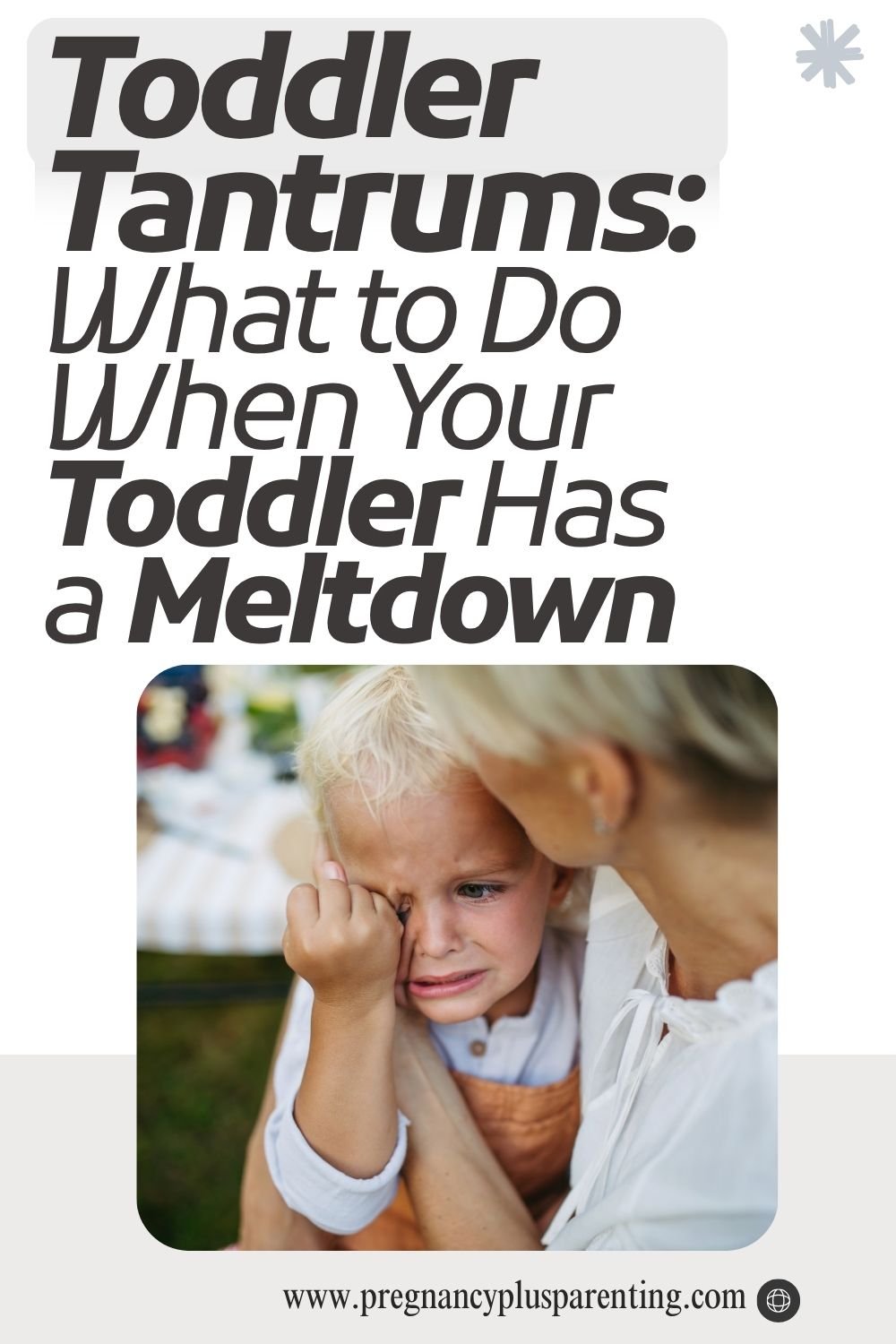

Your toddler wants the blue cup. The blue cup is in the dishwasher. A few seconds later they’re screaming, flat on the kitchen floor, and you’re standing there holding a dirty spoon.
If that sounds familiar, you’re in very large company. A toddler meltdown is loud and tiring, and it often hits at the worst possible moment. It’s easy to start wondering what you did wrong, but usually the answer is nothing. Tantrums are one of the most common things parents of young children deal with, and a few small changes in how you respond can make them easier to get through.
Why Do Toddlers Have Tantrums?
A tantrum is rarely about the cup. Mostly it’s a small child with bigger feelings than they know what to do with.
Language plays a large part. Toddlers usually know exactly what they want and can’t say it, so the frustration comes out as toddler screaming or crying instead. Their emotions also arrive fast and strong, while the part of the brain that handles waiting and calming down is still under construction. Telling a two-year-old to “just calm down” is a bit like asking them to read the newspaper. Tantrums often start around 12 to 18 months, which is when wanting things gets well ahead of being able to ask for them.
One group of researchers looked at parents’ accounts of tantrums in 335 children between 18 and 60 months. They found that a tantrum tends to combine anger and distress. Anger comes first and fades, and the crying and the need for comfort build slowly. That might explain why a child can go from shouting at you to sobbing in your arms within a couple of minutes.
Plenty of ordinary things feed into it too. A child who is tired or hungry has very little patience, and a missed nap can turn a small letdown into a big one. Toddlers also want to do everything themselves, so being helped when they wanted to try alone, or being told no, can feel huge. And if they’re deep in a game, stopping to get in the car is hard.
Busy, noisy places can simply be too much. A young child can have a tantrum after a big stimulating event, like a birthday party. If meltdowns seem to follow certain places or situations, our guide on signs of sensory processing issues in toddlers may be worth a look.
Children differ, and some have more frequent or more intense tantrums than others. For a general picture of what’s typical at this age, see our 2-year-old development milestones.
What to Do During a Toddler Tantrum
When a meltdown is at its peak, your child can’t reason or negotiate, and they won’t learn much either. The aim is simply to get through it safely while you stay steady. It may help to know that in the same research, three quarters of tantrums lasted five minutes or less. In the middle of one, it feels far longer.
- Stay as calm as you can. You don’t have to be perfectly calm, just a little calmer than the situation. Breathe out slowly, loosen your shoulders and speak quietly. Toddlers pick up a lot of their calm from the adults around them.
- Keep your child safe. Move anything hard or breakable out of the way. If you’re somewhere risky, such as beside a road or at the top of the stairs, pick them up and move first, then deal with the feelings.
- Use fewer words. A long explanation won’t get through while your child is flooded with emotion. A short sentence has a better chance.
- Name the feeling. You can acknowledge how they feel without agreeing with what they’re doing. “You’re so upset. You wanted the blue cup.” Or “That was hard. You weren’t ready to stop playing.” It helps them feel understood, and over time they pick up the words for what they’re feeling.
- Keep the boundary. Kind and firm can go together. “I know you want another biscuit. We’re all done with biscuits today.” If the answer is no, say it gently and let it stay no. Saying the same short line again is fine.
- Give space if they need it. Some toddlers want to be held in the middle of a meltdown, and others push you away and get angrier if you crowd them. Watch which one you have today. You can sit nearby and say, “I’m right here when you’re ready.”
- Come back together afterwards. When the storm has passed, offer a hug, a drink of water or a quiet few minutes. A lecture isn’t needed. Something small is enough: “That was really big. Now you’re calm. Want to read a book?” In one analysis of parent accounts, some children went to their parent by themselves once a tantrum ended, which suggests that reconnecting afterwards matters to them. It also shows your child that big feelings don’t damage your relationship.
What NOT to Do During a Tantrum
Most parents have done every one of these, so there’s no reason to feel guilty. It’s just useful to know what tends to make things worse.
Yelling adds more noise to a situation that’s already overloaded. If you’d like other options, we wrote about disciplining a 2-year-old without yelling. Long lectures don’t work either. A child in the middle of a meltdown can’t take in a speech about sharing or manners, so save any teaching for later and keep it brief.
Threats such as “I’ll leave you here” can scare a toddler, and they don’t teach anything about handling feelings. Shaming, like “You’re being naughty” or “Everyone is looking at you”, tends to make a child feel bad about themselves without helping them behave differently.
Giving in just to stop the crying is probably the hardest to avoid, especially when you’re worn out or in public. The risk is that if a meltdown regularly turns a no into a yes, your child may learn that meltdowns work. Changing your mind for a good reason is fine. Just try not to change it only because of the noise.
What If Your Toddler Hits, Kicks or Throws Things?
Hitting, kicking and throwing are common at this age, and they’re upsetting when they happen. A toddler who hits during a meltdown is usually overwhelmed rather than being mean.
Start with safety. Block the hit or step back, and keep it short: “I won’t let you hit. Hitting hurts.” If they’re throwing things, take the object and give them something safer. “Throwing the cup isn’t safe. You can throw this soft ball.” Stomping, squeezing a cushion or tossing a soft toy gives all that energy somewhere to go.
If your child keeps hurting you or someone else, calmly move them somewhere else and say as little as possible. Try not to hit back or punish physically, because it shows them the exact behavior you’re hoping they’ll stop. For more ideas, see Why Does My Toddler Keep Hitting? 8 Ways to Respond.
How to Prevent Some Toddler Tantrums
You won’t stop them all, and that isn’t the goal. A few habits can still make meltdowns happen less often.
Toddlers feel safer when they roughly know what comes next, so a predictable routine helps. Warnings before a change help too: “Two more minutes, then shoes on.” Child psychologists at Johns Hopkins All Children’s Hospital suggest a five-minute warning when a routine is about to change or a child is finishing play. A sand timer or a tidy-up song works for some children.
Small choices give a bit of control. “Red cup or green cup?” works better than an open question, since both options are ones you’re happy with. Sleep and food matter more than most people expect, so try to avoid errands at nap time and keep a snack in your bag. If naps have turned into a daily fight, our post on toddlers who refuse to nap might help.
A bit of one-on-one time each day, even ten minutes with your phone put away, can mean your child needs to work less hard for your attention. And think about which battles are worth having. Mismatched socks probably aren’t. Holding your hand beside a road is.
What to Do About Tantrums in Public
When a toddler melts down in the middle of a supermarket, it can feel as though the whole shop has stopped to watch. Most people haven’t, and many of the ones who did notice have been through it themselves.
Try to focus on your child instead of the audience. If you can, move somewhere quieter, like the car or just outside the door. Stay close, use your short phrases and wait. Abandoning a full trolley is completely fine if that’s what the moment needs.
Planning ahead can help a little. Go out after a nap and a meal, bring a snack, and tell your toddler what’s going to happen before you get there. If it happens anyway, it’s a rough ten minutes and nothing more. It says nothing about you as a parent.
When Should Parents Talk to a Pediatrician or Other Professional?
Tantrums are a normal part of toddlerhood for most children, but it’s fine to ask for advice if something doesn’t feel right. You might want to speak to your child’s pediatrician or another qualified professional if:
- tantrums seem very frequent, very long or unusually intense for your child
- your child often hurts themselves or other people during meltdowns
- your child holds their breath during tantrums, especially if they faint
- you’re worried about their speech, hearing, behavior or development (our post on toddlers not talking at 2 explains speech concerns in plain terms)
- things are getting worse over time, or strong tantrums continue well past the preschool years
- your child seems upset for much of the day and has trouble recovering
- you’re finding it hard to cope, or you’re worried about how you’re reacting
Health organizations, including the American Academy of Pediatrics, advise contacting your child’s provider about self-injury, hurting others, breath-holding with fainting, or tantrums that get worse after age four. Johns Hopkins All Children’s Hospital also mentions tantrums that are more severe, longer, or happening many times a day.
You don’t need to wait until things reach a crisis. A professional can talk through what you’re seeing and point you to support. And if you’re the one finding it hard, that’s reason enough to ask for help.
Frequently Asked Questions
When do toddler tantrums usually start?
Many children start between 12 and 18 months, when what they want has outgrown what they can say. They’re often most noticeable in the second and third years, though every child is different.
How long does a tantrum last?
It varies. In one well-known study, most tantrums were over within five minutes, but some go on longer. They often settle sooner when your child feels safe and you stay calm and consistent.
Is it normal for a 3-year-old to have tantrums every day?
It can be, and it’s exhausting for a lot of parents. We go into more detail in our post on 3-year-old tantrums every day.
Should I ignore a tantrum?
You can ignore the behavior without ignoring your child. Stay close, keep them safe and don’t react to every scream, but let them know you’re there.
Are time-outs okay?
Some families find a short calm-down break useful, as long as it’s a quiet place to reset and not a punishment. Others prefer to stay with their toddler the whole time. Choose what suits your child, and keep it brief and gentle.
Will giving in once ruin everything?
No. Children learn from patterns over time, and a single slip won’t undo much. If you did give in, aim to hold the line a bit more calmly next time.
Final Thoughts
Tantrums are loud and messy, and they wear you out. They’re also one of the ways toddlers slowly learn to handle big emotions. Staying calm, keeping everyone safe, saying less and holding gentle limits won’t end every meltdown, but it can make them shorter and less frightening for both of you.
Be kind to yourself on the bad days. Your child is learning, and so are you.
Sources and Further Reading
- Temper tantrums in young children: 2. Tantrum duration and temporal organization (Potegal, Kosorok & Davidson, 2003, Journal of Developmental and Behavioral Pediatrics)
- Young children’s post tantrum affiliation with their parents (Potegal & Davidson)
- Overstimulation (Raising Children Network)
- When to Worry About Toddler Temper Tantrums (Johns Hopkins Medicine)
- Temper Tantrums (UF Health, citing American Academy of Pediatrics guidance)