
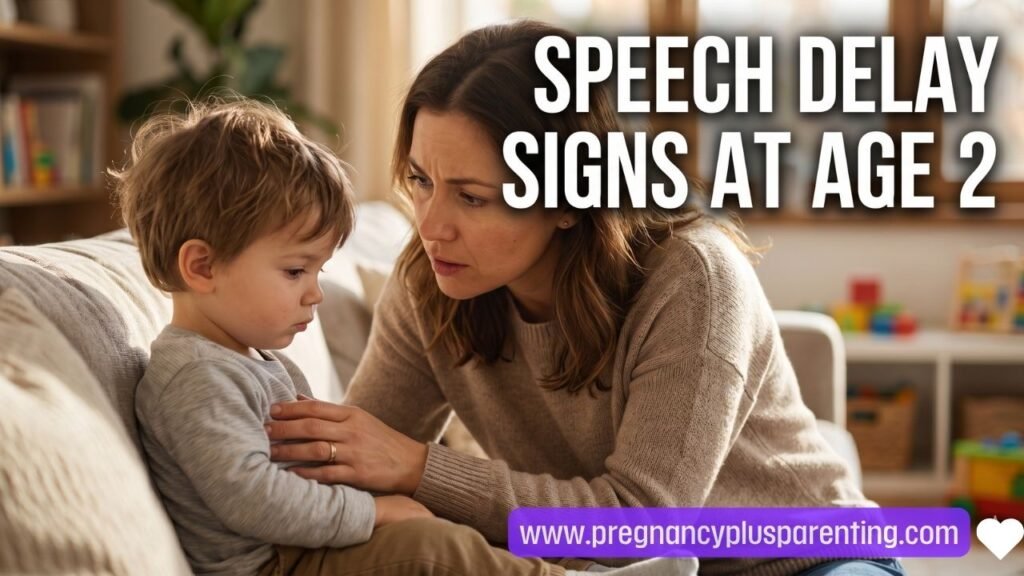

A real mom who has been in the anxiety spiral shares everything she learned — and what actually helped
My son Theo turned two on a Friday in November. He could say “mama,” “dada,” “no,” “more,” and a version of “ball” that sounded approximately like “buh.” That was it. Five words, generously counted. While I knew from reading that the milestone was 50 words by 24 months, I had been telling myself for months that he was “just a late talker,” that boys develop more slowly, that his cousin didn’t talk until three and turned out fine, that Einstein didn’t speak until four.
I had memorized every piece of reassuring anecdote available on the internet. And underneath all of it was a quiet, persistent anxiety that I couldn’t quite talk myself out of — because I knew, in the way that parents simply know things about their children, that something was different. Not wrong. Not broken. Just different, and needing attention.
Getting Theo evaluated was the best thing I have ever done as a parent. Not because there was something terrifying wrong — he had a moderate expressive language delay with some receptive components, evaluated at 16 months by the time the therapist did her assessment — but because the early intervention we accessed changed the trajectory of his communication development in a way that no amount of waiting would have.
He is four now. He will not stop talking. Last week he told me, in considerable detail, about the entire plot of a book he had read at preschool, complete with character voices.
This article is what I wish I had found at the beginning — clear, honest, and actually useful.
What’s Actually Normal at Age Two — The Real Range
Let me start with honest numbers, because the internet gives you two extremes — either alarming statistics about language delay rates, or cheerful anecdotes about brilliant late talkers — and neither is actually helpful when you are trying to assess your own child.
The research-based language milestones for 24 months are:
Vocabulary: Most children have at least 50 words by 24 months. The range within “typical” is genuinely wide — a child at the 10th percentile may have around 30–40 words, while a child at the 90th percentile may have 300 or more. The 50-word benchmark is the threshold that most speech-language pathologists and pediatricians use as a starting point for concern — not a pass/fail line.
Word combinations: Most children are combining two words by 24 months — “more juice,” “daddy go,” “no nap.” This is actually the milestone that many SLPs weight more heavily than vocabulary count alone, because two-word combinations represent a significant leap in linguistic understanding.
Comprehension: Receptive language (understanding) typically runs significantly ahead of expressive language (speaking) at this age. A child who understands far more than they say is showing healthy receptive development — but a significant gap between understanding and speaking is still worth evaluating.
If I had to give you one single number to hold onto: 50 words and two-word combinations by 24 months. A child who is significantly below this threshold — particularly combined with limited comprehension, limited pointing, or other social communication differences — deserves a professional evaluation. Not because the outcome is necessarily serious, but because early intervention, when needed, is significantly more effective than waiting. The research on this is consistent and clear.
Late Talker vs. Speech Delay vs. Something Else — What’s the Difference?
These terms are often used interchangeably by parents and sometimes even by non-specialist professionals, but they describe meaningfully different things. Understanding the distinction helps you have a more informed conversation with your pediatrician or speech-language pathologist:
A child with limited expressive vocabulary — typically under 50 words at 24 months — but who shows otherwise typical development: good comprehension, good social engagement, good eye contact, varied gestures, and some word-like sounds. These children often “catch up” but benefit significantly from early support.
A broader delay affecting both expressive and receptive language — or specific aspects of speech production (articulation, fluency, voice). May involve both understanding and speaking, and typically benefits from speech-language therapy. The cause can range from hearing loss to developmental differences to environmental factors.
Language delay is sometimes the first observable sign of autism spectrum disorder or other social communication differences. These are distinguished by patterns beyond vocabulary — limited eye contact, limited joint attention, limited gesturing, lack of social referencing, repetitive behaviors. Evaluation distinguishes these from pure language delay.
A late talker and a child with a broader language delay may look similar on the surface — both have limited vocabularies — but the evaluation process, the support approach, and the trajectory differ. This is precisely why a professional evaluation is so valuable: it tells you not just that there is a gap, but what kind of gap it is and what will help most. You cannot reliably make this determination from a checklist alone.

Speech Milestones Checklist — 18 to 30 Months
Here is a detailed, honest checklist of speech and language milestones between 18 and 30 months. Use this as a starting point for your own observations — not as a verdict, but as a framework for a conversation with your child’s doctor:
Receptive & Expressive
Typical
Typical
Typical
Watch
The key milestone age
Typical
Typical
Typical
Typical
Evaluate
Expanding rapidly
Typical
Typical
Typical
Evaluate now

What Causes Speech Delays in Toddlers
There is often no single identifiable cause for a toddler speech delay — and when parents learn this, it sometimes comes as a relief (it wasn’t something I did) and sometimes as a frustration (but then why?). Here are the most common factors associated with speech delays in toddlers:
Hearing loss or ear infections
Hearing is the foundation of language development — children learn to speak by hearing speech. Undiagnosed hearing loss or recurrent ear infections that cause intermittent hearing reduction are among the most common and most treatable causes of speech delay. A hearing test is typically the first step in any speech delay evaluation.
Developmental language disorder
Some children have a neurologically based difficulty acquiring language that is not explained by hearing loss, intellectual disability, or autism — this is called Developmental Language Disorder (DLD) and is one of the most common neurodevelopmental conditions, affecting about 7–10% of children. It responds well to speech-language therapy.
Autism spectrum disorder
Language delay or difference is one of the most common early signs of ASD, though it is important to note that most children with speech delays do not have autism, and many autistic children have typical or advanced language. A comprehensive evaluation distinguishes language delay from ASD — and early identification of ASD leads to significantly better outcomes.
Oral motor differences
Some children have differences in the coordination or tone of the muscles involved in speech production — the tongue, lips, jaw, and soft palate. These children may understand language well but have difficulty physically producing speech sounds. Oral motor difficulties are assessed by a speech-language pathologist and treated with specific therapeutic techniques.
Multilingual environment
Children growing up in multilingual households may appear to have smaller vocabularies in each individual language compared to monolingual peers — but when you count vocabulary across all languages, they are typically on track. True language delay in a multilingual child is assessed by considering total language knowledge, not one language alone.
Environmental and input factors
The amount of language-rich interaction a child receives significantly impacts language development. Children in homes with limited verbal interaction, high screen time, or caregiver depression or unavailability may show language delays that respond very well to environmental enrichment. This is not a judgment — it is a treatable pattern.
Let me say this clearly because it causes enormous unnecessary guilt: toddler speech delays are not caused by not reading enough, by working full-time, by using childcare, by not singing enough songs, by having a second baby, or by “not talking to them enough” in most typical family environments. Occasional screen time, having more than one child, or being a non-native speaker does not cause speech delay. Most speech delays have neurological or physiological roots that are not within any parent’s control. You did not cause this.
Red Flags — Signs That Need Professional Evaluation
The following signs, observed consistently, warrant a conversation with your pediatrician and likely a referral for a speech-language evaluation. You do not need all of these signs — any one of them, observed consistently, is enough reason to seek an evaluation:
Fewer than 50 words at 24 months. The benchmark most pediatricians and SLPs use as the starting point for evaluation. Count generously — any consistent meaningful sound or approximation counts. If you’re struggling to get to 50, that’s information worth acting on.
No two-word combinations at 24 months. “More milk,” “daddy go,” “big dog” — the combination of two words is a milestone that matters as much as vocabulary count. A child with 80 words but who never combines them is showing a different pattern than one who combines 30 words. Both warrant evaluation.
Loss of words or language skills that were previously present. If your child was saying words at 15–18 months and has stopped, this regression is one of the most significant red flags in toddler language development and warrants prompt evaluation. Regression can be a sign of a range of conditions that benefit greatly from early identification.
Not responding consistently to their name. By 12 months a child should reliably turn toward their name. At 24 months, consistently not responding when called by name — when you know they can hear other sounds — is a significant social communication flag that deserves evaluation.
Limited or no pointing to share interest. Declarative pointing — pointing at a dog to show you, not to get something, but to share the experience — is a key joint attention milestone. The absence of this kind of pointing alongside limited vocabulary is a combination that warrants prompt evaluation.
Limited eye contact or social engagement. Not maintaining eye contact during interaction, not bringing things to show you, not making bids for social interaction — these social communication differences, alongside language delay, can signal patterns beyond a simple late talker profile.
Any concern about your child’s hearing. If you have any doubt about whether your child can hear normally — they don’t startle to loud sounds, they don’t respond to voices from another room, they often seem not to notice sounds that others react to — a hearing evaluation is the first step. Hearing loss is the most common treatable cause of language delay.
Your gut is telling you something. This is not a clinical criterion — it is a human one. Parents who know their child deeply often perceive patterns before they can articulate them. If something feels different to you, that instinct is worth acting on rather than waiting to see if it resolves. Early evaluation costs very little. Delayed evaluation can cost a great deal in terms of a child’s developmental window.
What to Do If You Are Worried — Step by Step
Document what you observe — specifically
Before your pediatrician appointment, spend three to five days writing down exactly what you observe. Count your child’s words — write them down. Note whether they combine words. Note how they communicate needs (pointing, gesturing, pulling, words). Note their eye contact, their response to their name, their interest in other people. Specific, concrete observations are enormously useful to a clinician and help you organize your own thinking before the appointment.
Request a speech-language evaluation at your next pediatric appointment
Call your pediatrician and either make an appointment to discuss your concerns specifically, or flag them for your child’s upcoming well-child visit. Be direct: “I have concerns about my child’s speech development and would like a referral for a speech-language evaluation.” You do not need to justify this request. Pediatricians take these referrals seriously, and a good pediatrician will want to pursue it with you.
Request a hearing test at the same time
Ask specifically for a hearing evaluation — not just a pass on the newborn hearing screen, which was done at birth, but a current comprehensive audiological evaluation. Hearing can change after birth due to ear infections, fluid in the ear, or other conditions. A child with mild hearing loss may pass a basic screen but have genuine hearing difficulty that is affecting language development. Always rule out hearing first.
Contact your state’s early intervention program directly if under 3
In the United States, children under 3 with developmental delays are eligible for free evaluation and services under Part C of IDEA — regardless of income, insurance, or diagnosis. You do not need a doctor’s referral to request an early intervention evaluation. In most states you can self-refer by calling your state’s early intervention program or by asking your pediatrician for the referral number. The evaluation is free. If services are recommended, they are provided at no cost to the family. This is one of the most valuable — and underutilized — resources available to families of young children.
If your pediatrician says “wait and see” — advocate
“Let’s check back in six months” may be appropriate advice for a 15-month-old with borderline vocabulary. It is less appropriate advice for a 24-month-old with fewer than 50 words and no word combinations. If your pediatrician recommends waiting and you have significant concerns, you are entitled to say: “I’d feel more comfortable with an evaluation now — can you refer us?” Or self-refer to early intervention directly. You know your child. You are allowed to push for answers.
Remember: evaluation is not a verdict
Seeking an evaluation for your child’s speech does not mean you have concluded that something is seriously wrong. It means you are gathering information so you can respond appropriately. Many children who are evaluated show only a mild delay and make rapid progress with a brief period of therapy or targeted home strategies. Some are found to be within normal limits — which is also valuable information. The worst that happens from getting an evaluation you didn’t need is that you get reassurance. The worst that happens from not getting an evaluation you did need is a lost developmental window. Please err toward evaluation.

What Speech Therapy Actually Looks Like for a Toddler
One of the things that delayed me in getting Theo evaluated was honestly a fear of what therapy would look like — something clinical and cold that might upset him, something that would make him feel labeled or different. I want to address this directly, because it was completely unfounded and I don’t want it to delay you.
Speech therapy for toddlers looks like play. That is not a simplification. It is literally play — because play is the vehicle through which toddlers learn language, and skilled speech-language pathologists know this and build their entire intervention around it.
Child-led play with strategic language modeling
The SLP follows your child’s lead in play — if Theo wanted to play with trains, we played with trains. The therapist models language constantly just above your child’s current level: if your child says single words, the therapist models two-word combinations. If your child combines two words, the therapist models three. This is called “expansion” and it is one of the most evidence-supported language intervention techniques available.
Shared book reading with specific language goals
Reading books together is a core component of toddler speech therapy — but with specific techniques layered in: commenting on pictures, asking open questions, pausing to let the child fill in words, labeling emotions of characters, repeating key vocabulary multiple times. These are techniques you will be taught to use at home between sessions.
Songs, rhymes, and repetitive language activities
Toddlers learn language through repetition — the same song, the same rhyme, the same book read seventeen times creates the neural pathways for language. Therapists use songs and predictable language routines specifically because they create the perfect conditions for language learning.
Parent coaching — the most important component
This was the most valuable part of Theo’s therapy for us. The therapist didn’t just work with him — she taught us. She showed us specific techniques to use at home, explained why they work, and helped us embed them into our everyday routines. Parents who actively implement therapy strategies at home see dramatically faster progress than those who rely solely on the weekly session. The session is the instruction. Home is where the learning happens.
Typical frequency and duration
Early intervention speech therapy for toddlers typically begins with one or two sessions per week, each 30–60 minutes. Duration varies — some children make rapid gains and “graduate” within a few months; others benefit from ongoing support. Progress is reassessed regularly. The goal is always to build skills to the point where the child no longer needs formal therapy — not to create dependency.
What You Can Do at Home Right Now
While you are navigating the evaluation and therapy process — and even if your child turns out not to need formal therapy — these evidence-based strategies will support language development at home. These are not alternatives to professional evaluation when it is needed. They are what you do alongside it, and what you do while you are waiting for appointments:
Talk constantly — narrate everything
Running commentary on your day is one of the highest-impact language development strategies available. “Now I’m putting the red cup in the dishwasher. The water feels warm. Look, bubbles!” You are building vocabulary, sentence structure, and the understanding that words describe the world — all at once. Do this constantly.
Pause and wait — create space
Many parents of speech-delayed toddlers (understandably, lovingly) anticipate their child’s needs and supply words before there is any communicative demand. Try pausing — holding out the cup and waiting, looking at your child expectantly, giving them five full seconds to attempt communication before you fill the gap. The communicative pressure is what drives language development.
Read together daily and make it interactive
Read the same books repeatedly — repetition is how toddlers learn vocabulary. Point at pictures. Name things. Ask “what’s that?” Pause and let them fill in words they know. Make character sounds. Shared book reading is one of the most robustly evidence-supported language development interventions available — and it is free.
Expand what they say — don’t correct
When your child says “ba!” looking at a ball, respond with “Yes! Ball. Big red ball.” You are expanding their utterance without correcting or drilling. This expansion technique is exactly what SLPs use in therapy — it models the next level of language just above what your child is currently producing, which is the optimal zone for language learning.
Reduce screen time significantly
Screen time does not teach language to young toddlers — it displaces the back-and-forth human interaction that does. For children with speech delays especially, reducing solo screen time and replacing it with face-to-face interaction and play is one of the most impactful environmental changes you can make. This is not a judgment — it is a practical recommendation backed by considerable research.
Sing songs with repeated predictable language
The repetition, rhythm, and predictability of children’s songs create perfect conditions for language learning — children often produce their first word combinations through song before they use them in spontaneous speech. Old McDonald, Wheels on the Bus, Itsy Bitsy Spider — these songs are not just entertainment. They are language therapy in disguise.
What to Say — and What to Avoid — Around Your Late Talker
The language environment you create around your toddler matters. Here is what helps and what inadvertently gets in the way:
Tends to hinder
“Say ‘ball.’ Can you say ‘ball’? Say ‘ball.'”
“Use your words! Tell me what you want.”
“Why won’t you talk? Just say something!”
“Can you say that again? Say it properly.”
Filling all silence immediately before they can attempt
Asking constant test questions: “What’s this? What color is that?”
Tends to help
“Ball! There’s the ball. Big ball.” (comment, don’t drill)
“Milk?” (hold it out, pause, wait 5 seconds expectantly)
“Oh, you want the truck! Red truck. Here’s the truck.” (expand)
Responding to any communicative attempt warmly and immediately
Pausing and looking at them expectantly — creating space
Narrating what they are doing: “You’re stacking the blocks!”
Drilling a toddler to say words puts pressure on the relationship and creates anxiety around communication. Following their lead, expanding their attempts, and making language feel safe and rewarding is what grows language.
— Speech-Language Pathology research consensus
Common Mistakes Parents Make
Waiting too long because of reassuring anecdotes. “My nephew didn’t talk until three and he’s fine” is genuinely true — and it is also genuinely not information about your specific child’s situation. Some late talkers catch up without intervention. Some do not, and those who receive early support do significantly better than those who wait. You cannot know which category your child is in without an evaluation. Early evaluation costs very little. Waiting to see can cost a great deal.
Drilling words instead of modeling language. “Say ‘mama.’ Say ‘mama.’ Can you say mama?” feels proactive but research shows it creates communicative pressure that actually inhibits language development. Children learn language most effectively through natural, low-pressure, high-input interaction — not through drilling. Model language richly. Create communicative opportunities. Don’t drill.
Anticipating all needs before communication is required. You know your child better than anyone — which means you know what “the look” means before they have to say anything. But giving your child everything before they have to communicate reduces their motivation to develop language. Let communicative need exist. Create reasons to talk. Wait for the attempt.
Concluding that comprehension = no problem. “But she understands everything” is one of the most common things parents say before a speech delay evaluation — and while good comprehension is genuinely a positive sign, it does not mean the expressive delay should be ignored. Expressive language delay can exist alongside excellent receptive language, and it still benefits from evaluation and support.
Not implementing home strategies between therapy sessions. If your child begins speech therapy, the work done in one weekly 45-minute session is a small fraction of the language input your child receives at home. Families who implement the strategies taught by their SLP at home — consistently, across everyday routines — see dramatically faster progress than those who rely on therapy alone. The session is the instruction. Your home is the classroom.
FAQ from Worried Parents
Strong receptive language is genuinely a positive sign — it means the language comprehension systems are working well, which is important for prognosis. However, a significant gap between comprehension and expression — understanding well but producing very few words — is still a reason to seek a speech-language evaluation. Some children with this profile are “late talkers” who catch up quickly with or without support; others have a specific expressive language delay that responds very well to targeted therapy. An evaluation tells you which you’re dealing with, and you can’t determine this from a checklist alone.
Heavy screen time — particularly passive, solo screen consumption rather than interactive co-viewing — is associated with slower language development in young children. This is because screen time displaces the back-and-forth human interaction that is the primary driver of language learning. However, typical levels of screen time in most families are unlikely to be the sole cause of a significant speech delay. If there is a delay, reducing screen time and increasing face-to-face interaction is one of the most impactful things you can do — but please also pursue an evaluation, because the underlying cause may be something separate from screen exposure.
Bilingualism does not cause speech delay — decades of research support this clearly. Bilingual children may have smaller vocabularies in each individual language compared to monolingual peers, but when vocabulary across all languages is combined, they are typically on track. A bilingual child with fewer than 50 words in total across all languages at 24 months has a speech delay that deserves evaluation — bilingualism is not the explanation. When seeking an evaluation for a bilingual child, make sure the SLP has experience with bilingual language development and assesses your child in both languages.
You advocate. You can say: “I’d feel much more comfortable with an evaluation now — can you refer us to a speech-language pathologist?” You can also self-refer to your state’s early intervention program without a doctor’s referral if your child is under 3. The evaluation is free and the worst outcome is reassurance that your child is on track. If your pediatrician truly refuses and you remain concerned, seek a second opinion from a developmental pediatrician. Your instincts about your child deserve to be taken seriously.
Some children described as “late talkers” do catch up to peers without formal intervention — research suggests that approximately 50–60% of late talkers (children with limited expressive vocabulary but otherwise typical development) close the gap by school age. However, roughly 40–50% do not close the gap without support and go on to show language differences at school entry that affect learning and literacy. The problem is that you cannot reliably predict in advance which group your child will fall into. Early intervention is significantly more effective than late intervention, and the cost of getting help you didn’t need is far lower than the cost of not getting help you did need.
Please hear this: almost certainly not. The vast majority of speech delays have neurological or physiological roots — the way a child’s brain is wired to acquire language, hearing differences, oral motor differences — that are completely independent of how much a parent talks to them. In families with typical interaction levels, the quality and quantity of parental speech is rarely the determining factor in whether a language delay occurs. You loved your child. You read to them, talked to them, were there for them. That is not a cause of speech delay. Please release this guilt — it is not serving you or your child.
Your Child Has a Voice — It Is Coming
I want to tell you about the morning Theo told me, for the first time, that he loved me. He was three years and two months old. He had been in speech therapy for fourteen months. He had gone from five words to sentences to stories. And he looked up from his cereal one Tuesday morning and said, completely unprompted, “Mama, I love you so much.”
I went into the bathroom and cried for five minutes. Not from sadness — from the particular, overwhelming gratitude of a mother who was not sure, on a lot of the nights before that morning, that she would ever hear those words in quite that way.
Your child has something to say. They have thoughts and feelings and observations and humor and stories that are waiting to find their way out. The speech delay is not who they are — it is a gap between what they experience and what they can currently express. That gap can be closed, or significantly narrowed, with the right support.
Please seek that support. Please do it now, not in six months, not after one more period of waiting. The window of early intervention is open — and children who walk through it do so much better.
You are not a bad parent for having a child who is struggling to talk. You are an extraordinary parent for paying enough attention to notice, and for caring enough to do something about it.
That voice is coming. And when it arrives — it is worth every bit of the journey to get there.
Resources That Actually Help
ASHA (American Speech-Language-Hearing Association) — asha.org — the professional body for SLPs. Their parent section includes detailed information on speech and language milestones, how to find a certified SLP in your area, and what to expect from an evaluation.
Early Intervention (United States) — If your child is under 3, contact your state’s early intervention program for a free developmental evaluation. Ask your pediatrician for the referral contact, or search “[your state] early intervention” online. This program is federally mandated and serves families regardless of income or insurance.
Hanen Centre — hanen.org — a globally respected organization specializing in early language development. Their parent programs (particularly “It Takes Two to Talk”) are widely used and evidence-based. Their website also has excellent free resources for parents of children with language delays.
“It Takes Two to Talk” by Hanen — the book used by many SLPs to coach parents in language facilitation strategies at home. If your child is on a waitlist for therapy, this book gives you practical tools to use in the meantime.
This article is written to inform and support parents — it is not a substitute for evaluation by a qualified speech-language pathologist, developmental pediatrician, or your child’s own healthcare provider. If you have concerns about your child’s speech and language development, please bring them to your child’s doctor. This article can help you have that conversation more effectively. It cannot replace it.